June 26 is the International Day against Drug Abuse and Illicit Trafficking. This date is important for health in general, in particular of our youth. It is at an early age that we learn how destructive drugs and alcohol are.
The lamentable consequences leap in front of our eyes. Look at how many road traffic victims, the unhappiness in the bosom of households, and the high costs it imposes on healthcare systems. Just to mention alcohol, according to the Brazilian Health Ministry, 10 to 15 percent of the world’s population is considered dependent.
Shutterstock
Initiatives aimed at treating humanely those who have fallen into these traps of addiction or which focus on preventing such ills deserve all our support and incentives. Combating what is bad for people is also an act of legitimate charity.
Tougher dry lawshutterstock
The new Lei Seca [Dry Law] in Brazil, which was enforced in 2012, is providential. According to a spokesperson for the National Department of Motor Vehicles (DETRAN), the existing laws have been made tougher to reduce deaths and traffic accidents caused by alcohol consumption.
shutterstock
According to Agência Brasil, on January 29, 2013, the National Transit Council (CONTRAN) published Resolution 432/13 in the Diário Oficial da União [Brazilian Official Journal] establishing guidelines for the stricter Dry Law: "If the result of the breath test is greater than or equal to 0.05 milligrams of alcohol per liter of air, the driver will be fined R$ 1,915.40 for an extremely serious infraction, have his driver’s license suspended for 12 months, and vehicle impounded. Before, the limit was 0.1 milligrams of alcohol per liter of air."
Human lives depend on respecting this law. So much suffering can be avoided!
Bonifácio, Kennedy, Shaw, and the Invisible World
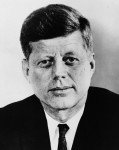
John Kennedy
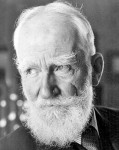
Bernard Shaw
In his speech before Parliament on June 28, 1963, in Dublin, Ireland, John Fitzgerald Kennedy (1917-1963) affirmed that "George Bernard Shaw, speaking as an Irishman, summed up an approach to life: ‘Other people,’ he said, ‘see things and say Why? But I dream things that never were—and I say: Why not?’"
As a descendant of Irish immigrants, JFK continued: "It is that quality of the Irish—that remarkable combination of hope, confidence and imagination—that is needed more than ever today. The problems of the world cannot possibly be solved by skeptics or cynics, whose horizons are limited by the obvious realities. We need men who can dream of things that never were, and ask why not."
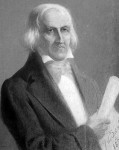
José Bonifácio
Now, these are also qualities of our good Brazilian people, illuminated with hope, no matter how bad the situation may be. At a joyful moment, illustrious José Bonifácio de Andrada e Silva (1763-1838), Patriarch of Brazil’s Independence, exclaimed: "Brazilians are enthusiasts of the beautiful ideal, friends of their freedom."
Reprodução BV
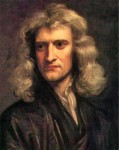
Newton
Reprodução BV
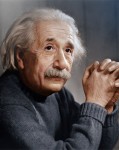
Einstein
Having said all these things, it is clear to those who "have eyes to see and ears to hear" that learning in the world is still incomplete. The current understanding of Spiritual Life is similar to the Universal Law of Gravity developed by Newton (1643-1727), with the later contributions of Einstein (1879-1955). For the sake of argument, we could say it does no good to simply deny it, since our contemporary scientific knowledge has not discovered all the laws that govern this principal.
Indeed, it is necessary to reiterate this teaching: social reform begins in the Spiritual realm. This point of view we have been discussing and we will develop it further in the course of explaining the Gospel-Apocalypse of Jesus in Spirit and Truth through the prism of His New Commandment, "Love one another as I have loved you."
José de Paiva Netto (1941-2025), a writer, journalist, radio broadcaster, educator, composer, poet, the President Emeritus and Consolidator of the Legion of Good Will, and Spiritual Leader of the Religion of God, of the Christ, and of the Holy Spirit. He was an effective member of the Brazilian Press Association (ABI) and the Brazilian International Press Association (ABI-Inter), a member of the National Federation of Journalists (FENAJ), the International Federation of Journalists (IFJ), the Union of Professional Journalists of the State of Rio de Janeiro, the Union of Writers of Rio de Janeiro, the Radio Broadcasters Union of Rio de Janeiro, the Brazilian Union of Composers (UBC), and the Academy of Letters of Central Brazil. He became an internationally recognized author in the defense of human rights and in his concepts of Ecumenical Citizenship and Ecumenical Spirituality, which, in his own words, represent “the cradle of the most generous values that are born of the Soul, the dwelling of emotions and of reasoning enlightened by intuition; the atmosphere that embraces everything that transcends the ordinary field of matter and comes from elevated human sensitivity, such as Truth, Justice, Mercy, Ethics, Honesty, Generosity, and Fraternal Love. In short, the mathematical constant that harmonizes the equation of spiritual, moral, mental, and human existence. Now, without the understanding that we exist on two planes―not only on the physical plane―it will be difficult to build a Society that is truly Ecumenical, Altruistic, and Solidary, since we would still be ignoring that the knowledge of Superior Spirituality elevates the character of creatures and, consequently, leads to the construction of the Planetary Citizenship.”
Comments Be the first to comment
The comments do not represent the views of this site and are the sole responsibility of their authors. It denied the inclusion of inappropriate materials that violate the moral, good customs, and/or the rights of others. Learn more at Frequently asked questions.



The comments do not represent the views of this site and are the sole responsibility of their authors. It denied the inclusion of inappropriate materials that violate the moral, good customs, and/or the rights of others. Learn more at Frequently asked questions.