Loving Is a Prayer

Chico Xavier
Prayer is not the refuge of cowards or of the idle. It uplifts us, while work fulfills us. The Pope prays, the Dalai Lama meditates, Chico Xavier (1910-2002) prayed, rabbis chant their supplications, protestants sing their praises to God, Muslims recite the Holy Koran . . . What is Prayer if not Love that is willing to do great deeds? When an atheistic brother meditates and does something that benefits society, he is praying too. In my book Crônicas e Entrevistas (2000), I wrote that praying and meditating are similar. Praying is not simply a figurative action. It is the strongest instrument that the human essence, the Divine Capital, has. In The Imitation of Christ, German monk Thomas À Kempis (c. 1380-1471) wrote: “Sublime is the art of talking to God.”

Avoiding the Vomit of Nations
In these times of globalization, when many frontiers fall on the heads of the poorest populations, people are looking for a safe direction for their existence, which has been governed by discrepant forces. The destiny offered to them is not always the best one. History repeats itself in the sum of mistakes that may lead to an uncontrollable mass movement. Nations also vomit.
Therefore, they seek relief from their pain in violence or in the Invisible Realm. But as many people have become accustomed to a restrictive view of the Spiritual Power, they address their prayers to an anthropomorphic god, who does not answer them since he does not exist. And that is when they get frustrated.
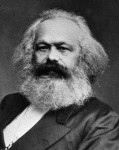
Karl Marx
I believe that even Karl Marx (1818-1883) would have uttered a prayer as a powerful psychic tool for strengthening the mind and as a factor of stability in the face of the personal and family struggles we all face. Despite the conviction of some, the creator of Marxism was also a human being, concerned in his own way with social problems. The controversial author of Capital certainly meditated on his ideals. Whether he knew it or not, in a way he was praying.

The comments do not represent the views of this site and are the sole responsibility of their authors. It denied the inclusion of inappropriate materials that violate the moral, good customs, and/or the rights of others. Learn more at Frequently asked questions.